Make a foot-measurement note you can actually reuse
Keep raw foot length separate from a brand allowance, so a useful measurement does not become an unexplained shoe-size guess.
Updated:
Preserve the raw measurement
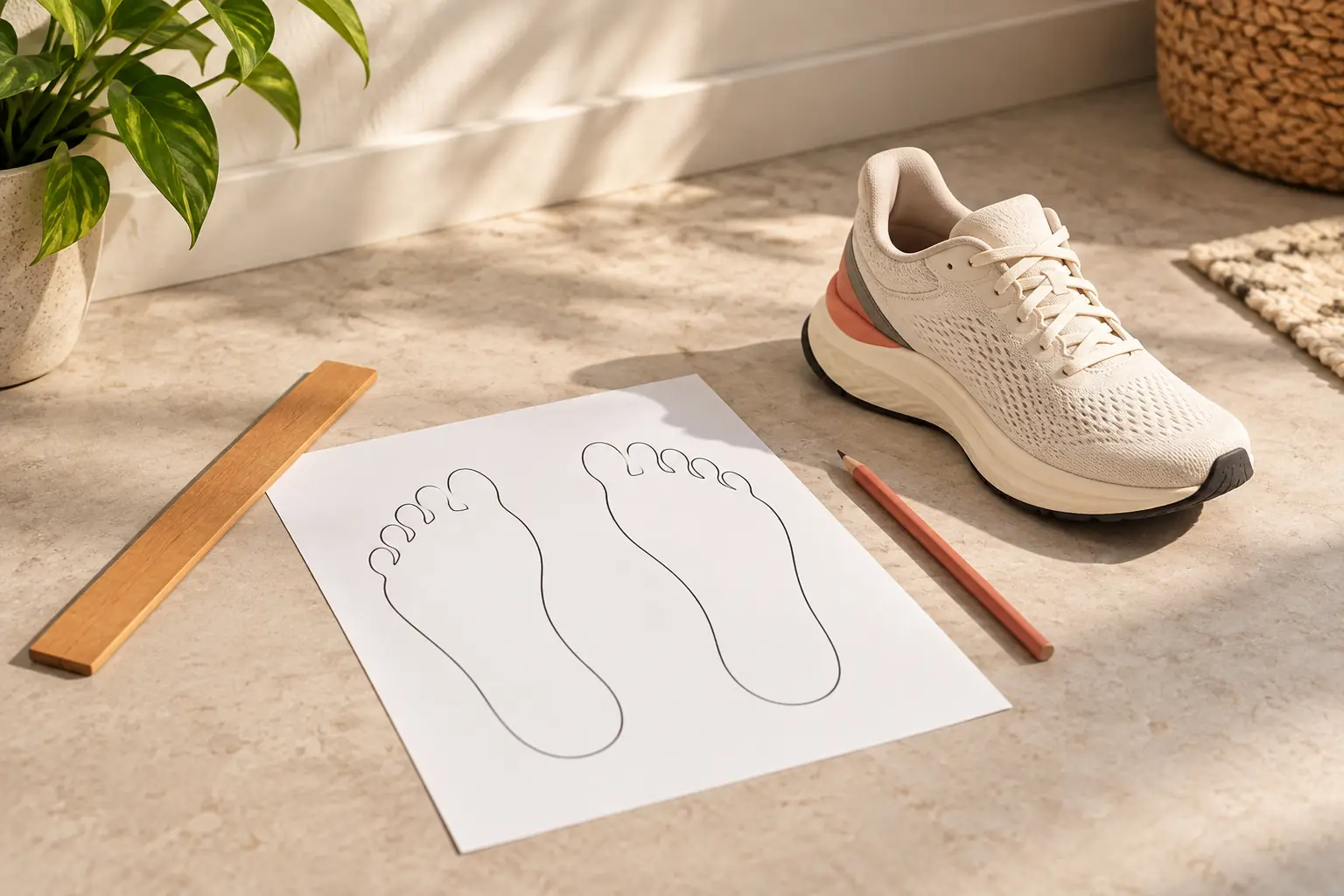
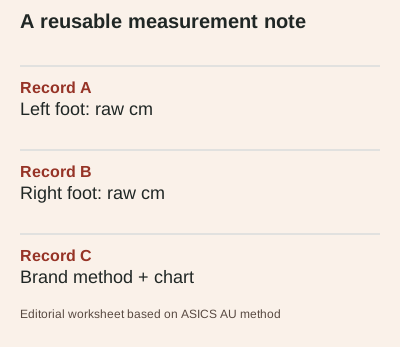
A foot measurement becomes more useful when you can tell what happened to it. Write down the original heel-to-longest-toe distance before adding any allowance or looking for a size label. Keep separate entries for your left and right foot. That record lets you revisit the question when a different retailer uses a different chart, instead of trying to remember whether your old centimetre number already included extra room. It also gives a store fitter a clearer starting point for a conversation.
ASICS AU measurement method ? Altra AU size chart ?
Follow one method completely
ASICS Australia describes a paper-and-wall method, measuring both feet from heel to longest toe, then adding 1–1.5 cm before matching its guide. Treat those as instructions attached to that guide. They are not evidence that every other brand uses the same measurement convention. Read the relevant instructions beside the chart you actually intend to use, especially when a page uses terms such as foot length, shoe length or centimetres without explaining the distinction. Ask for clarification when the wording is ambiguous.
Make the arithmetic visible
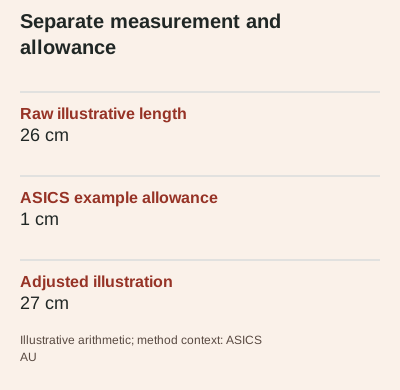
For an illustrative record, a raw length of 26 cm plus an allowance of 1 cm becomes 27 cm. Using 1.5 cm in the same fictional calculation gives 27.5 cm. These are arithmetic outputs, not sizes recommended for your feet. The important feature is that the original 26 cm remains visible. If you store only 27 cm, a later comparison could add another allowance without anyone noticing. A short note with separate raw and adjusted fields prevents that avoidable bookkeeping error.
Do not turn centimetres into a universal label
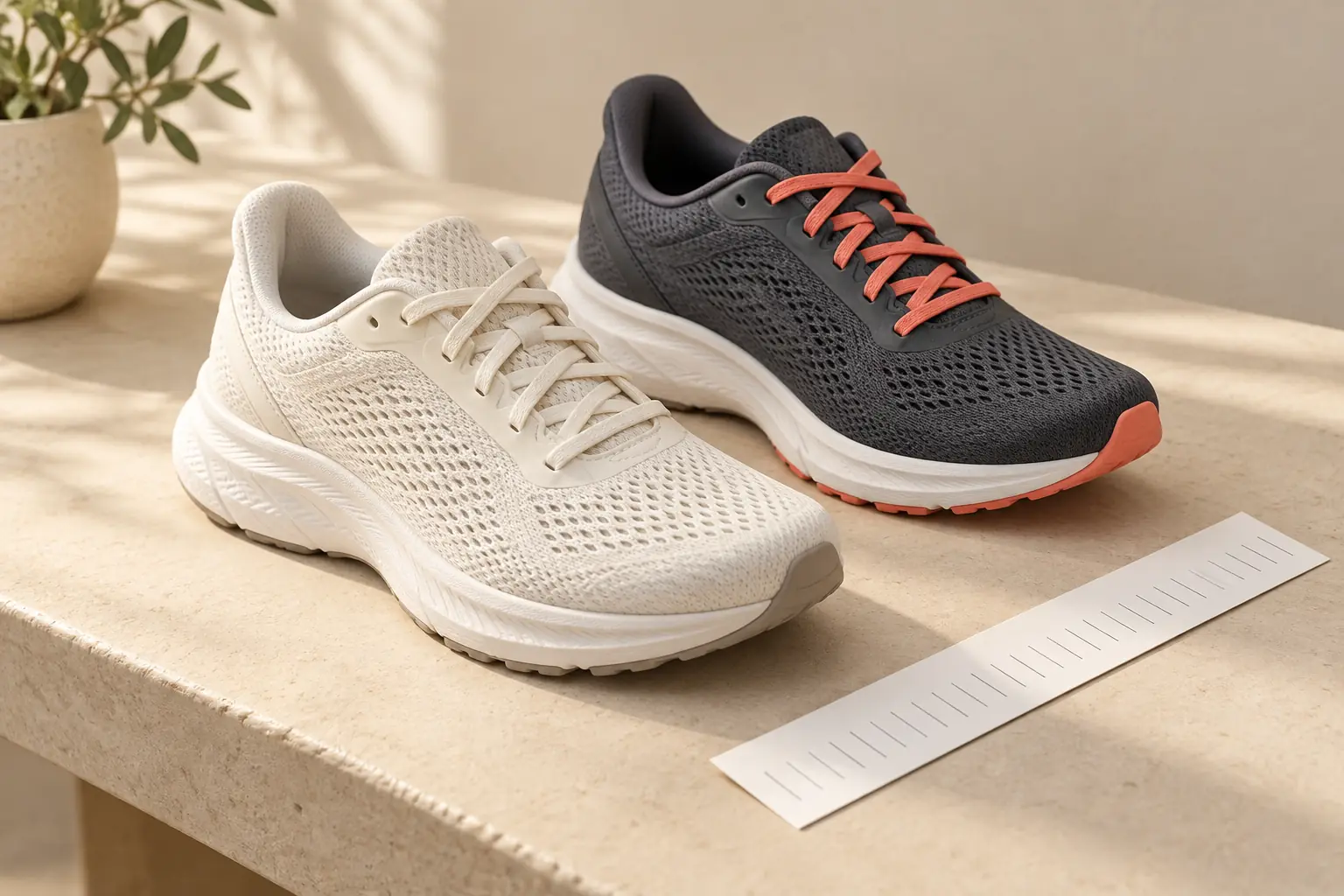
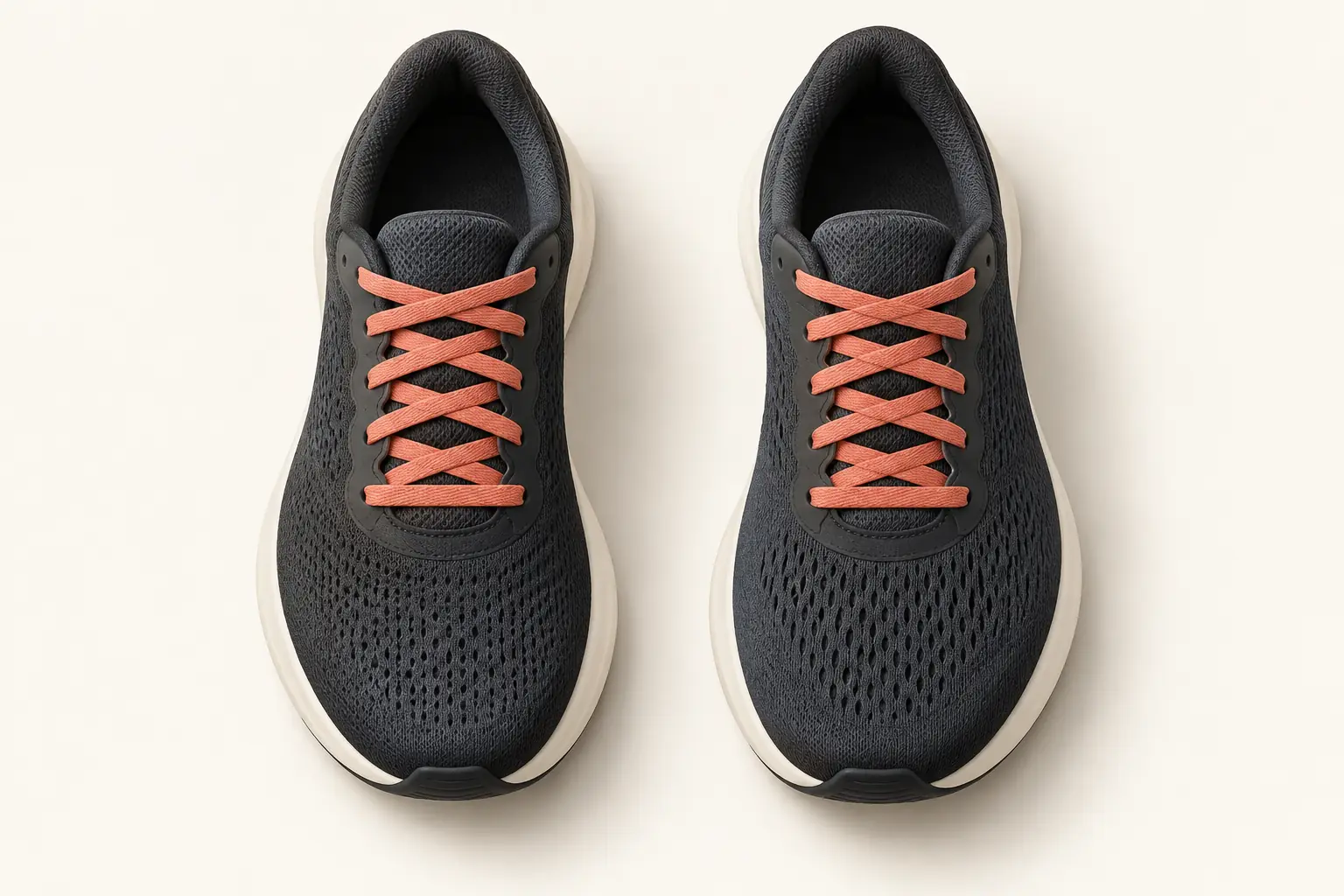
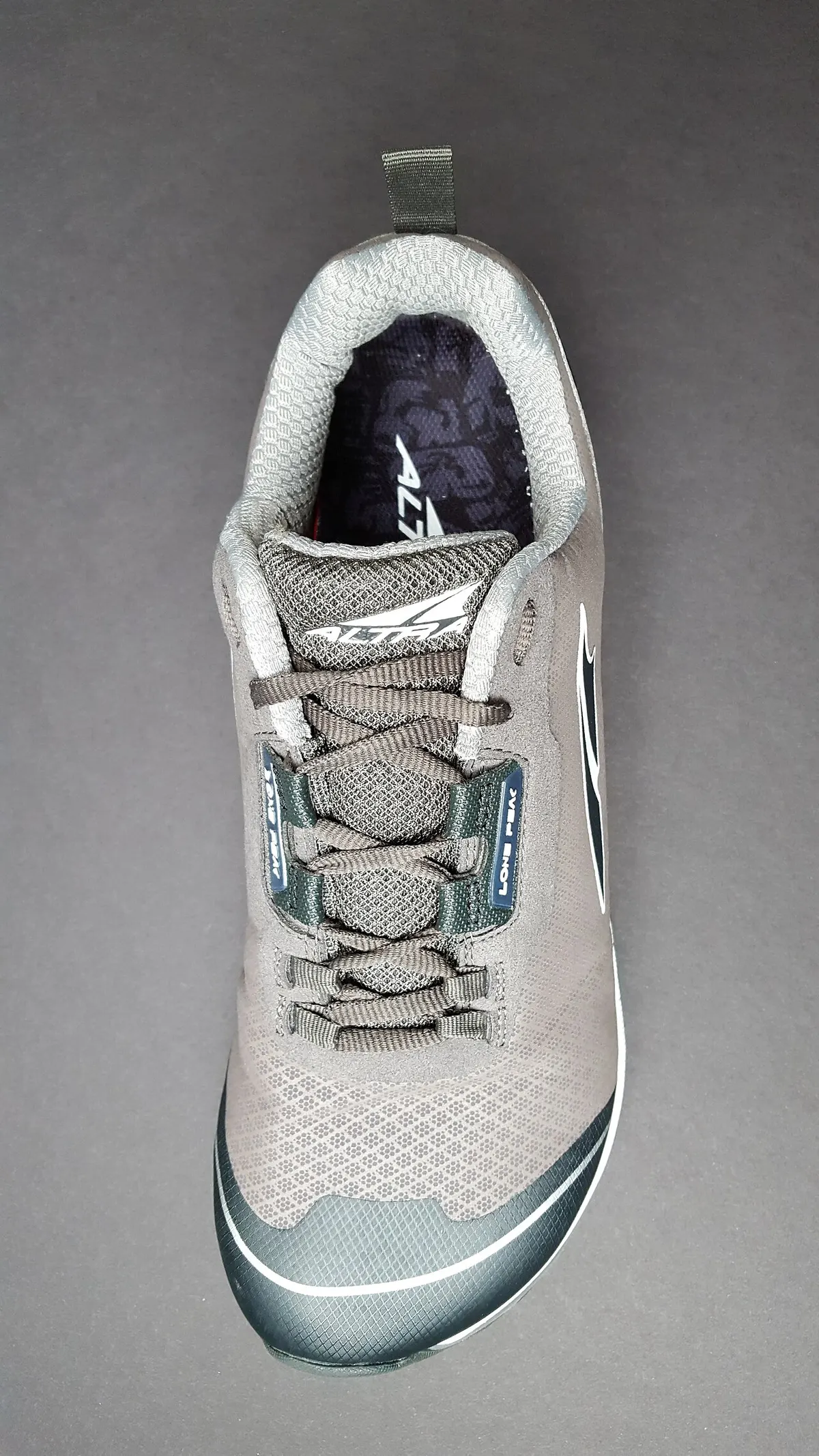
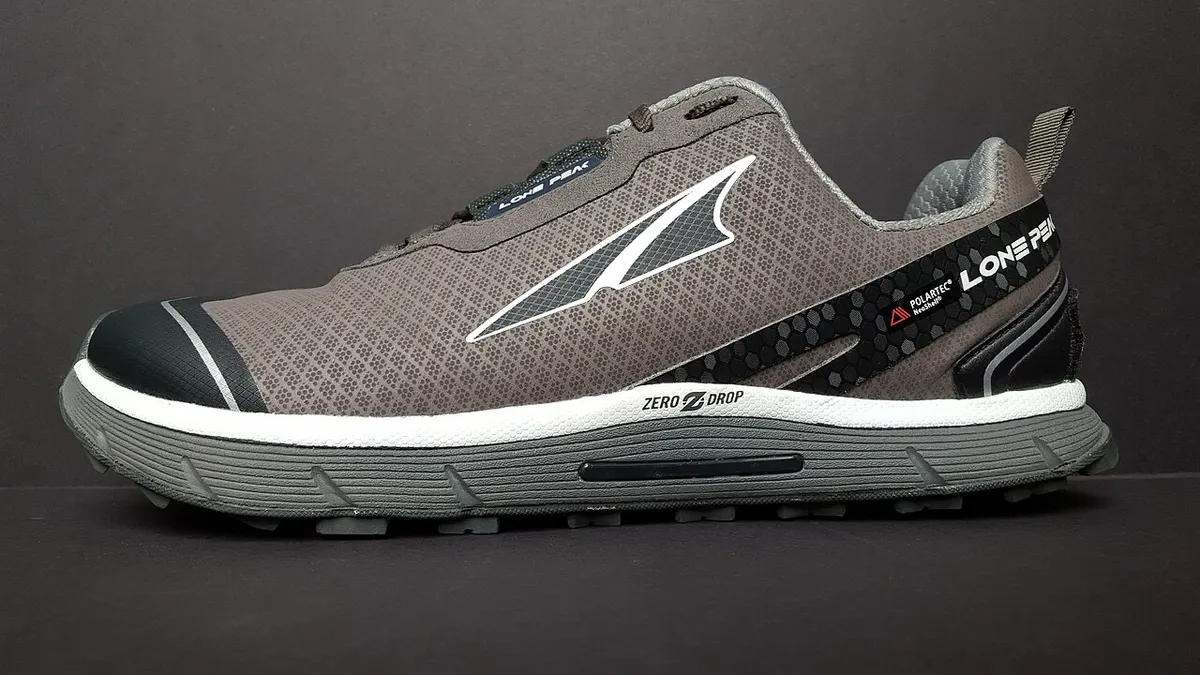
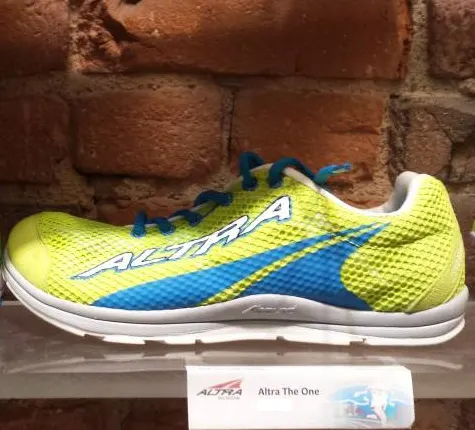
Altra Australia has its own centimetre column and separate tables for its ranges. Its page also explains which label is used when ordering. A measurement note cannot replace that chart or settle the shape of a particular model. Width, volume and the construction around the heel remain separate questions. The archive Altra images here show why viewing an upper and a side profile can help identify a shoe, but they cannot reveal the internal space available to your foot.
Bring the context to the fitting question
Record the date, the measuring method and the socks or other circumstances relevant to the fitting conversation. Avoid presenting a highly precise decimal as if it were a laboratory result when your mark on the paper is broad or your ruler was awkwardly positioned. If the repeated readings disagree, preserve that uncertainty and ask the seller how to proceed. Buying a different size merely to make two inconsistent measurements agree does not explain the inconsistency.
Keep a short, usable record
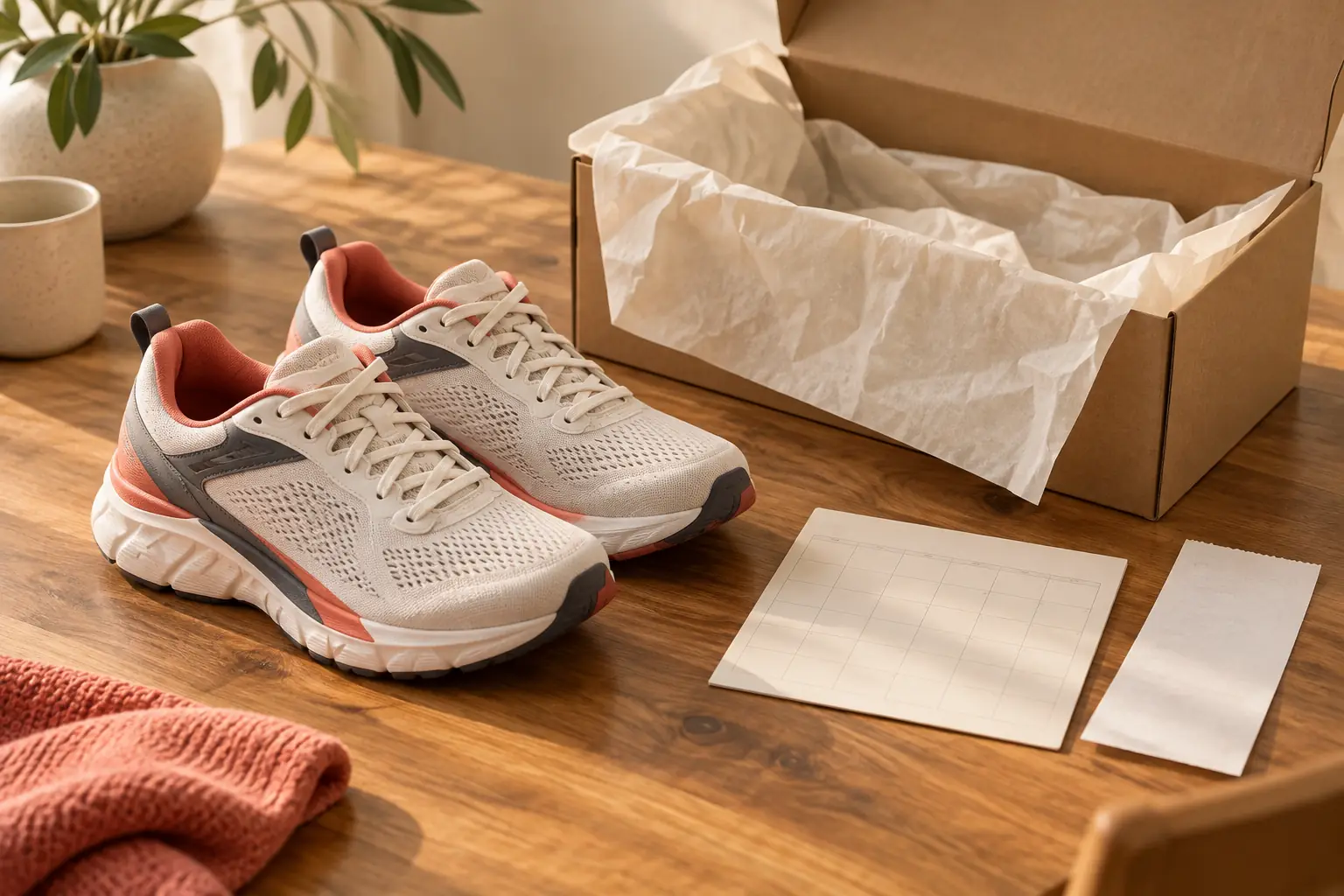
Before ordering, put the measurement note next to the exact model, width, range and chart link. Confirm whether the seller expects the raw length or an adjusted figure; then record the selected size system as well as the number. Save the return conditions separately because a measurement process does not guarantee comfort or an accepted return. Your next useful action is to resolve any unexplained allowance with the seller, not to assume that extra arithmetic has made an uncertain fit certain.
Open official model documentation ? Open official model documentation ?