Width labels and fit profiles answer different questions
Compare a named fit profile and a width option as separate listing details, with a clear record of the model and range.
Updated:
Ask two different listing questions
A product page can describe a fit profile and offer a width option at the same time. Record both. A profile describes a particular approach to the shape of the shoe, while a width label identifies an option within the range. Neither term, by itself, tells you the measured internal dimensions of the pair you will receive. Start with the full model name and range, then check whether the width selector changes the actual variant rather than merely changing descriptive text.
Altra fit profiles ? Altra AU size chart ?
Read the brand labels in context
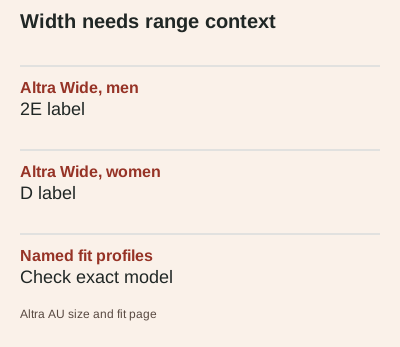
Altra Australia lists Original, Standard, Racing and Wide fit profiles on its size page. It describes its Wide option using 2E for men and D for women. Those letters need the range attached to them; copying a D into a comparison sheet without that context loses information. Use the page to formulate a specific question about the model you are considering. Do not turn the naming system into a universal scale that supposedly makes every brand or every generation of shoe directly comparable.
Keep length and width on different lines
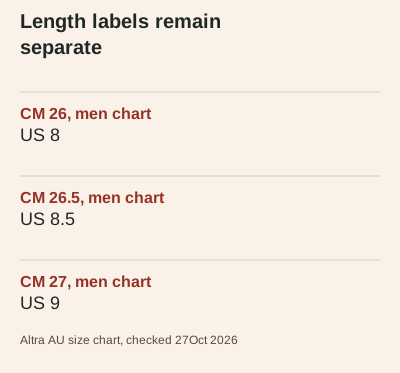
The same page has length-related chart rows: the men’s 26 cm entry corresponds to US 8, 26.5 cm to US 8.5 and 27 cm to US 9. Reading across those rows does not produce an internal width measurement. Choosing the next size because a listing lacks width information changes the length label without resolving the missing width detail. A comparison note should therefore have separate spaces for the size row, the named profile and the selected width, with unknown information left visibly unanswered.
Use photographs for identification
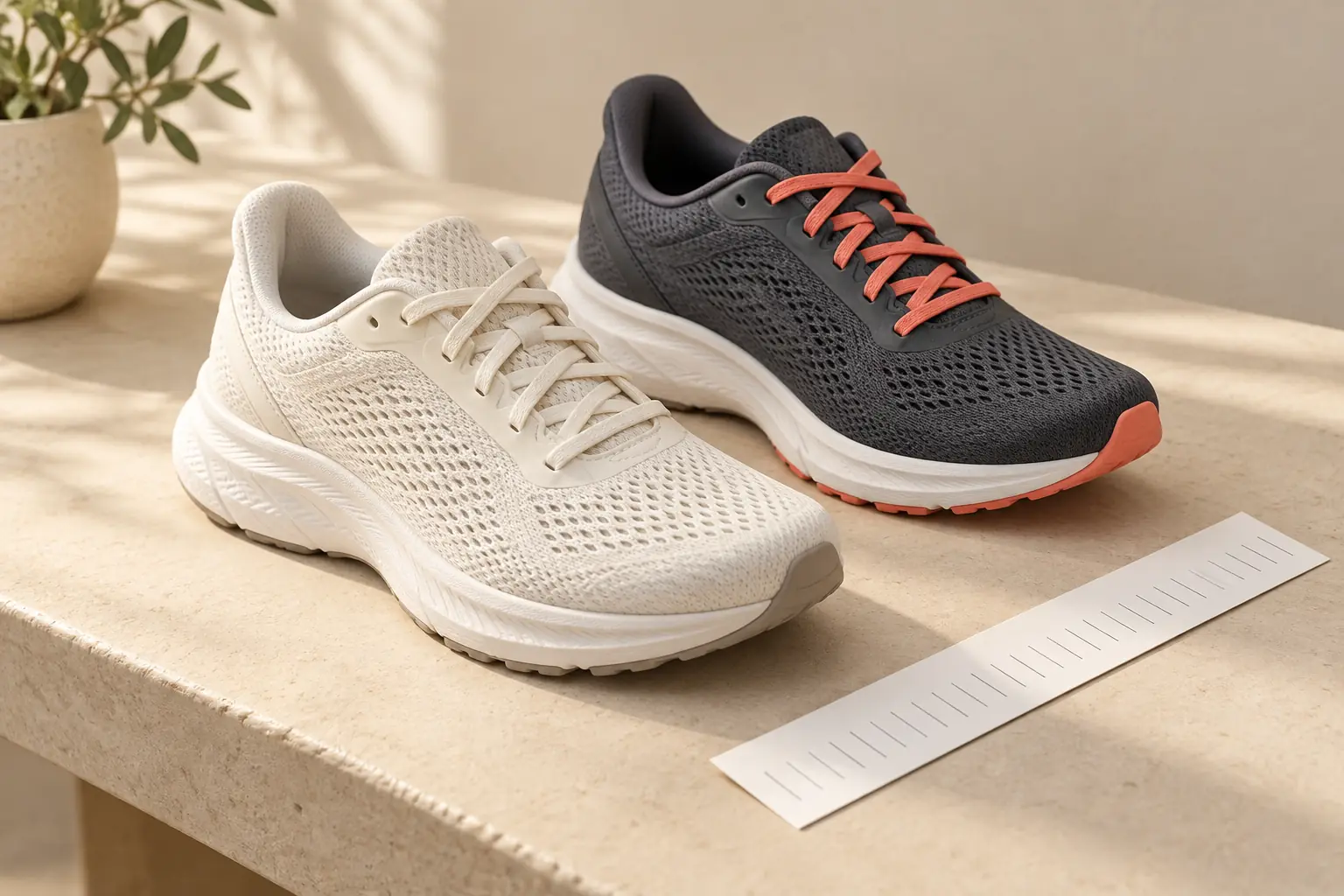
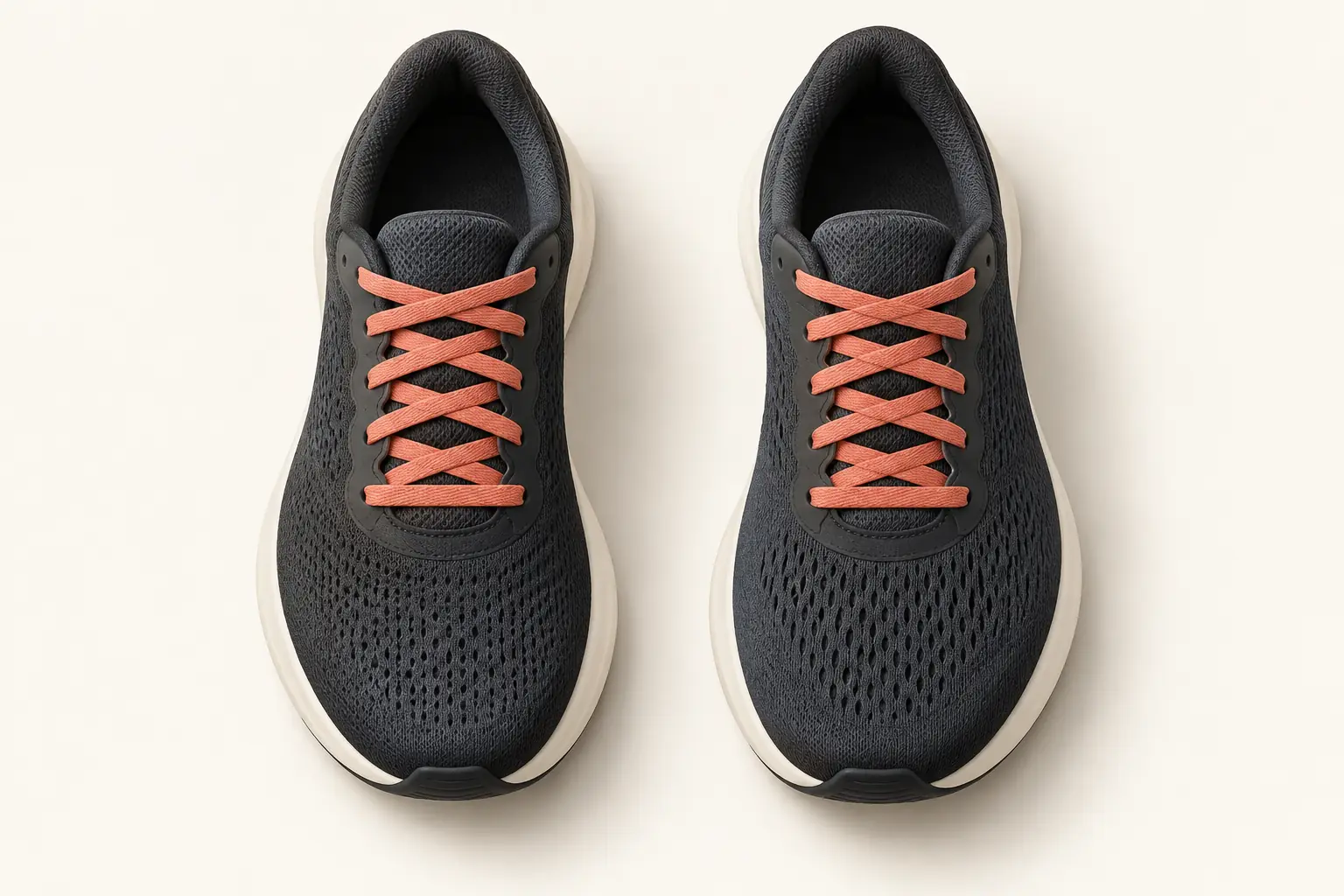
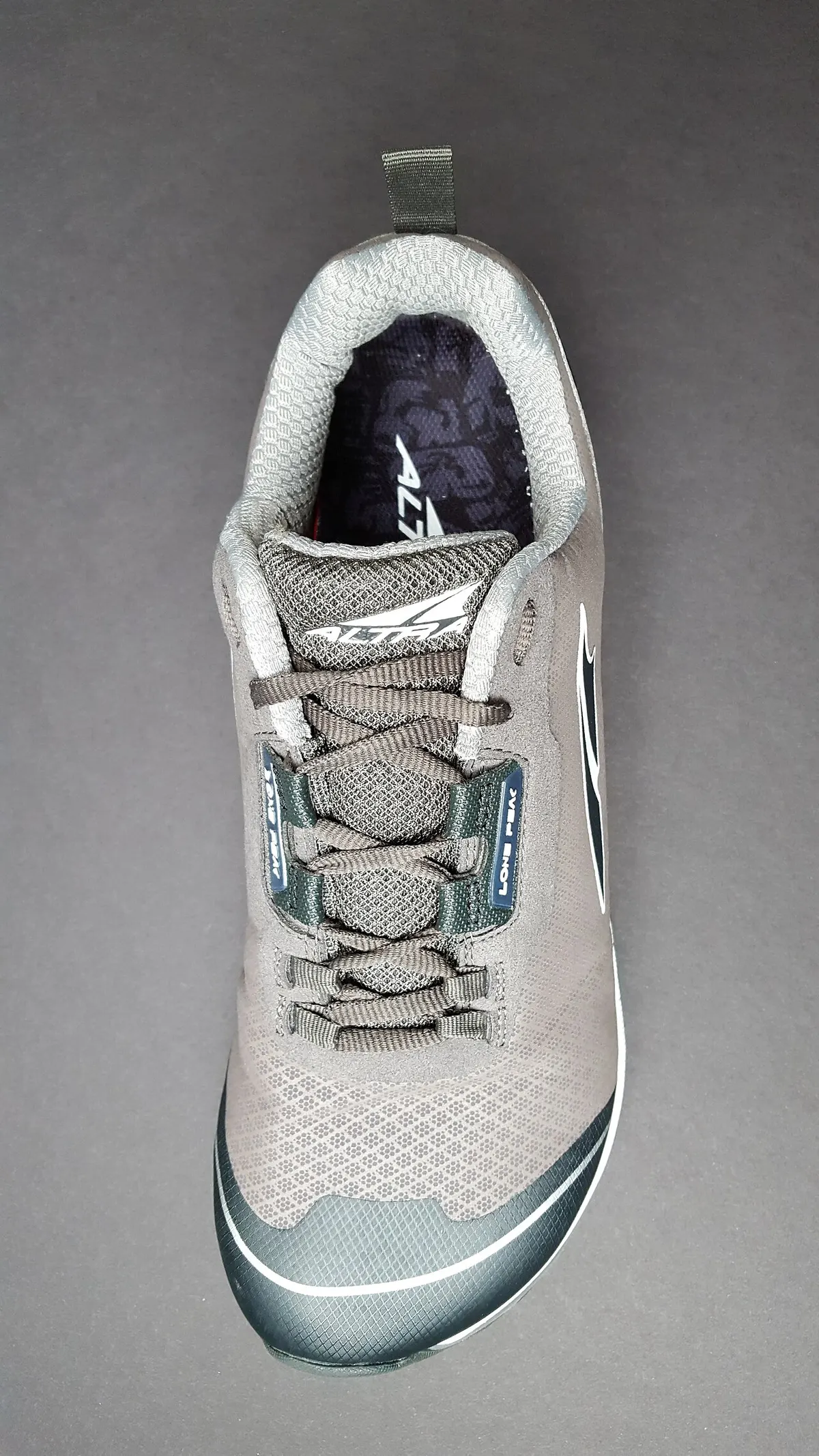
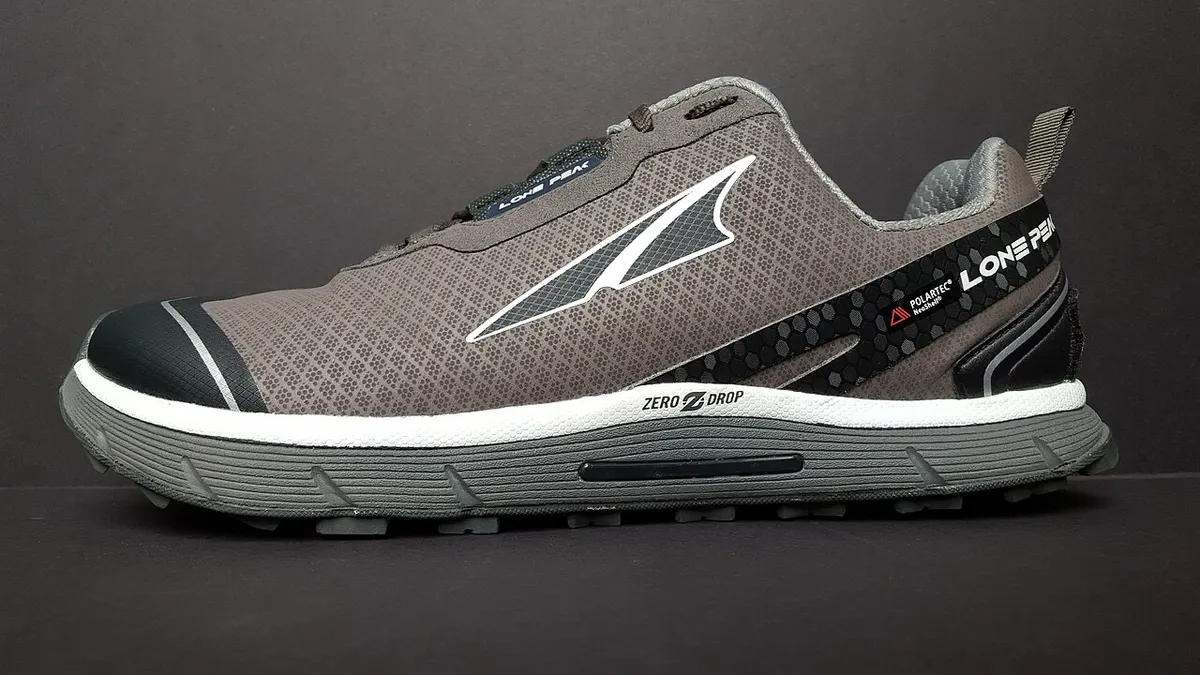
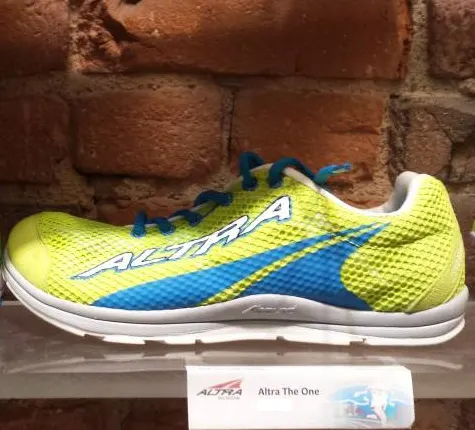
The older Lone Peak photographs show an upper from above and the shoe in profile. They can help a reader understand which views to request from a seller, but they cannot establish a current model’s fit category or the width of its interior. Perspective, lighting and shoe size all change how broad a photograph appears. Avoid estimating a width from an image without a reliable scale, and do not use an archive photograph as evidence that a present listing contains the same construction.
Make the seller question precise
Instead of asking whether a shoe is simply wide, give the seller the exact model, range, size and width option shown in the basket. Ask which profile applies to that variant and whether the listing has a manufacturer reference that confirms it. If you are comparing an older pair, record its full label rather than just its brand. A useful response should identify the variant being discussed; a generic reassurance about the whole range does not resolve a mismatch between two product pages.
Decide what still needs a fitting
A well-kept comparison record can eliminate a labelling error, but it cannot diagnose foot needs or establish how a shoe will feel in use. Keep the seller’s fitting advice and return conditions alongside the specification notes. If the width or profile remains uncertain, seek a fitting opportunity or a clearer explanation before ordering. The goal is a choice made with identifiable information, not a promise that a particular letter or marketing name will solve discomfort for every runner.
Open official model documentation ? Open official model documentation ?