Compare watch battery life in the mode you will record
Compare Forerunner 165 published runtime figures using the same GPS and playback mode, while keeping manufacturer ceilings separate from measured use.
Updated:
Choose the recording mode first
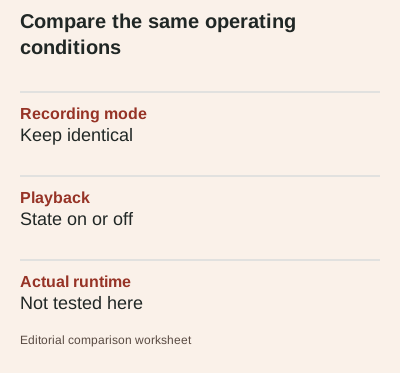
A watch battery comparison starts with the activity you want the watch to record, not the largest number on a product card. Write down whether the comparison concerns GPS recording, normal smartwatch use or recording with music playback. Those are different operating conditions. If two listings use different conditions, leave them on separate rows until you can find matching documentation. Choosing the longer headline without reading the mode can make a weaker comparison look more certain than it really is.
Forerunner165 battery manual v5 June2025 ?
Use a documented example
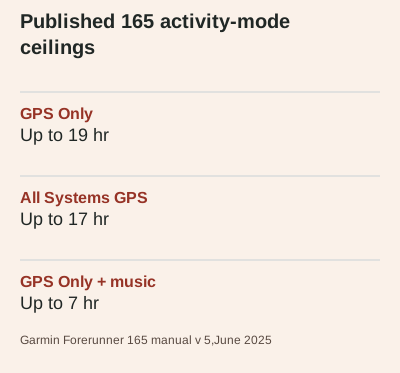
Garmin's Forerunner 165 series manual gives up to 19 hours for GPS Only activity mode and up to 17 hours for All Systems GPS activity mode. It also lists up to 7 hours for GPS Only with music playback. These are published ceilings under the named modes. They are useful for organising a comparison, but they are not results from our own sample. The manual states that enabled features, GPS, notifications and connected sensors can affect actual battery life.
Do not mix specifications and observations
Give manufacturer claims and personal observations different columns. A specification is attached to the documented model and mode; an observation is attached to a particular watch, battery condition and session. If you already own a watch, a record of settings and charge behaviour can help you ask a support question, but one session does not validate every published runtime. Avoid describing a calculated fraction of the headline hours as a reliable remaining-time forecast when actual use has not been measured.
Keep the variant identifiable
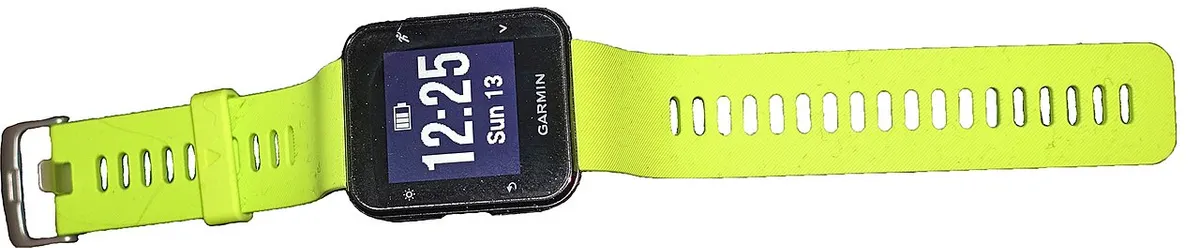
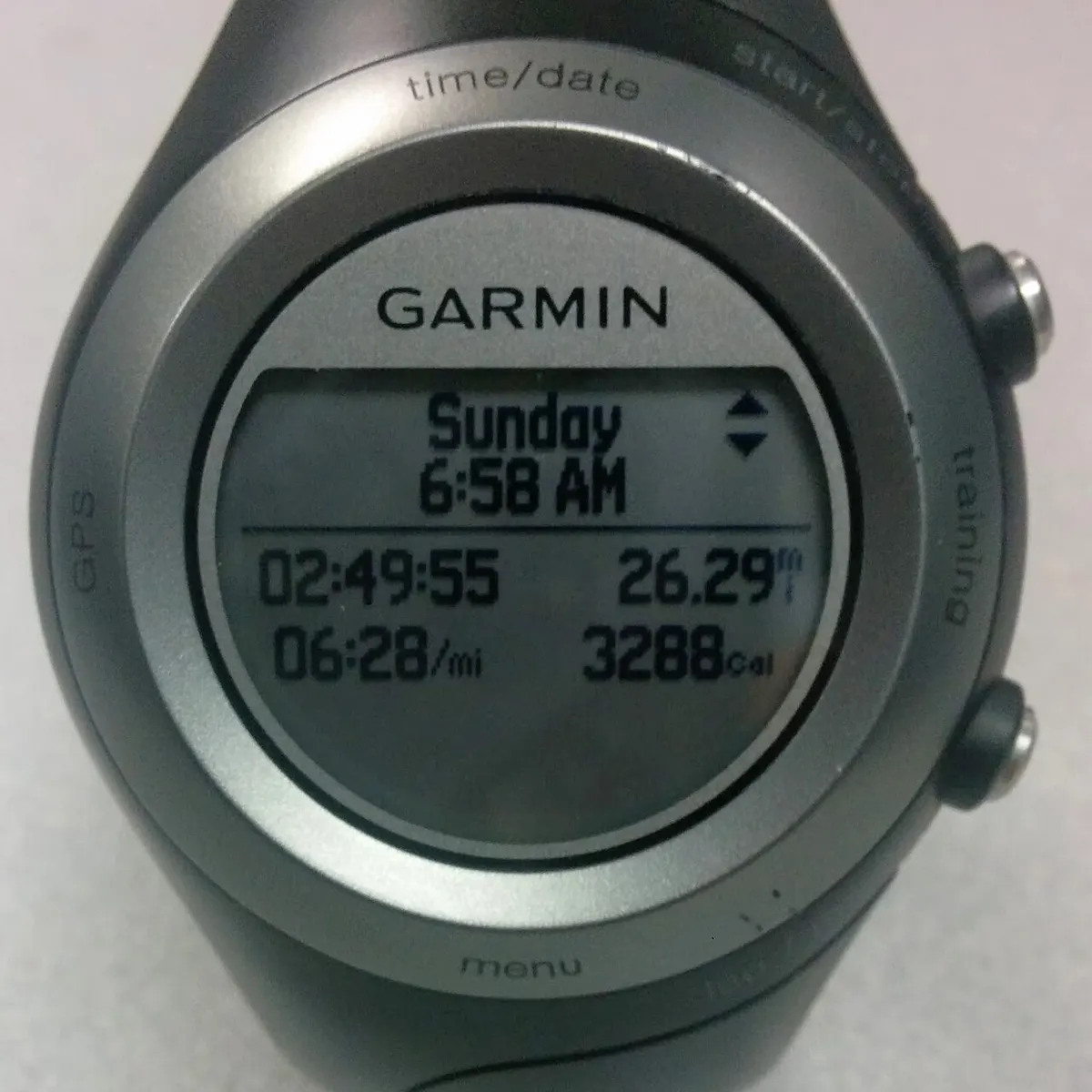
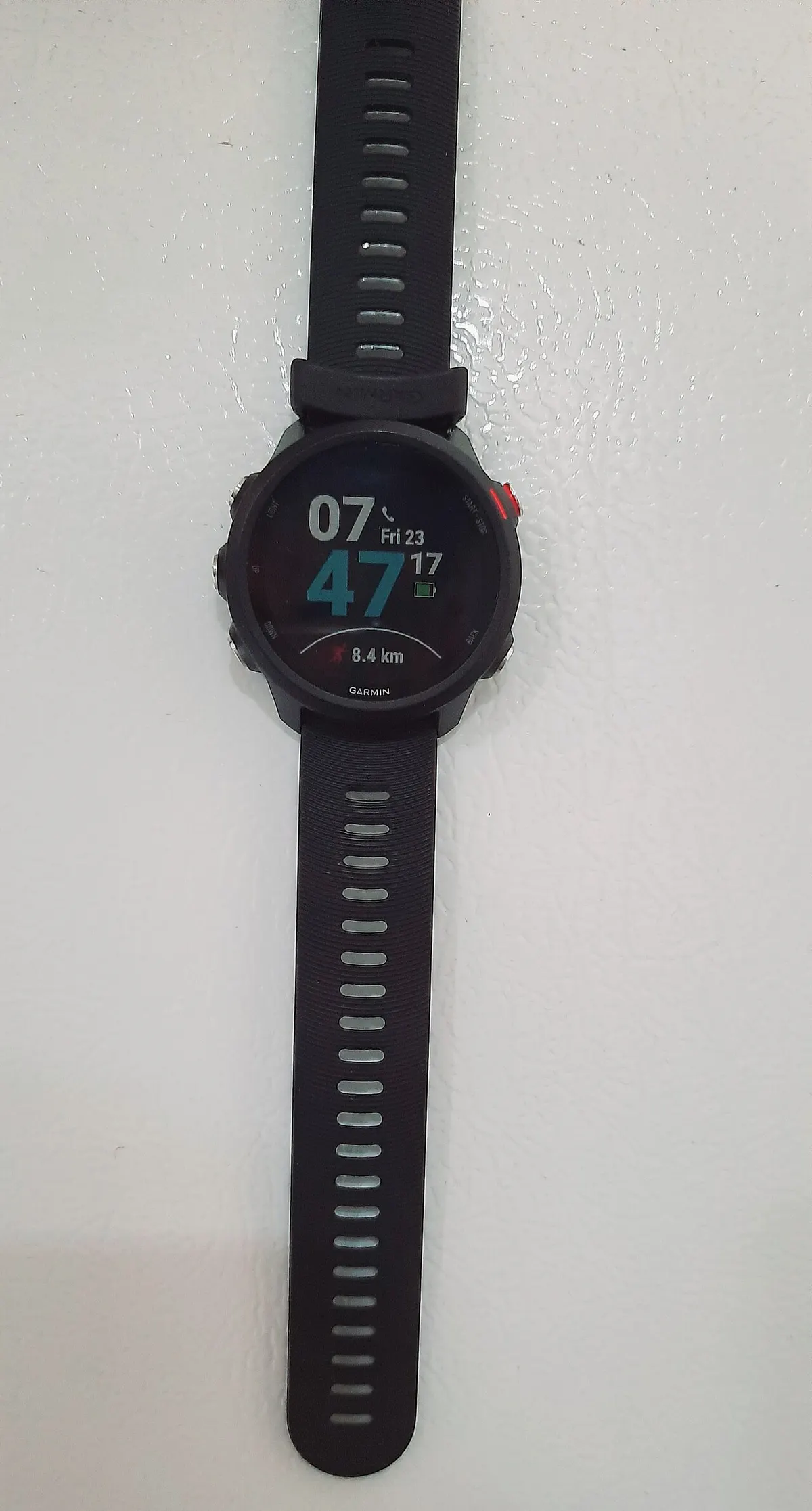
The family name alone may not establish which functions the unit in the basket supports. Music-related rows need the relevant music-capable variant, and a seller's photograph may show another version or generation. The archive watch photographs here are labelled with their own model names. They illustrate how differently watch interfaces can look; they are not Forerunner 165 photographs, current offers or evidence of battery performance. Confirm the actual model identifier against the listing and the official manual before relying on any feature.
Compare the consequences of a mode choice
Changing a recording mode is a functional choice as well as a runtime comparison. Read what the mode does in the exact manual rather than assuming that the longer figure means the better option for every activity. A clear comparison can simply show that the two documented activity modes have different ceilings while leaving accuracy and individual suitability untested. It should not invent an outdoor trial or imply that a battery specification proves the quality of the recorded route.
Save a comparison you can revisit
Keep the manual version, checked date, exact variant, mode and stated runtime together. Add the seller's delivered AUD quote separately, because price is not part of the battery specification and may change independently. Before buying, reopen the official documentation and resolve any conflict between the product card and the manual. The practical result is a like-for-like specification comparison, with the limits visible, rather than a promise that the watch will record for the full advertised period in your own conditions.