Why smartwatch days are not running hours
Keep the Forerunner 165 smartwatch-day figure separate from its activity-hour rows when deciding how to compare charging requirements.
Updated:
Read the noun beside the number
A claim measured in days can sound much larger than a claim measured in hours, but the operating mode matters more than the unit. When comparing a running watch, keep its ordinary smartwatch claim separate from its activity-recording claim. A product card may show the longest figure prominently while placing the activity conditions elsewhere. Find the official table and write the mode name beside every number before deciding which figure is relevant to your intended use.
Forerunner165 battery manual v5 June2025 ?
Use the actual mode descriptions
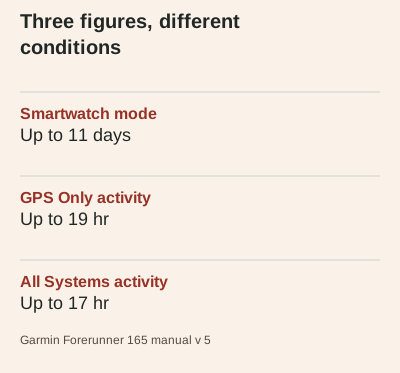
The Forerunner 165 manual lists up to 11 days in smartwatch mode with activity tracking, phone notifications and wrist-based heart rate. Its GPS Only activity row is up to 19 hours, while All Systems GPS activity mode is up to 17 hours. These rows describe different conditions. They are manufacturer statements, not measurements made for this publication. The manual also notes that enabled features and connected sensors influence actual battery life, so the headings and qualifications are part of the specification.
Do not let a correct conversion imply the wrong thing
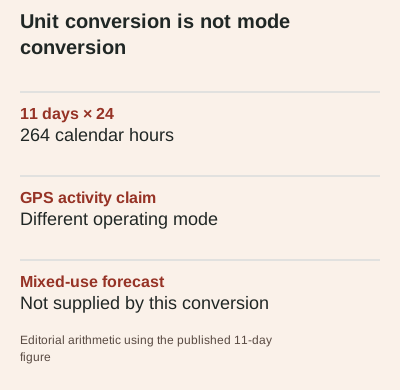
Multiplying 11 days by 24 hours gives 264 calendar hours. The arithmetic is correct, but it does not produce a claim for 264 hours of GPS recording. Changing units does not change what the watch is doing. This is an easy error to introduce into a comparison spreadsheet if all battery figures are forced into a single column. Keep a mode column immediately beside the converted value, or use separate tables when the conditions cannot be matched sensibly.
Treat mixed use as an unanswered question
A week containing ordinary wear, notifications and several recorded activities is not necessarily represented by any single row in the table. Without a validated model for that mixture, adding fractions of the headline claims does not establish a reliable charging schedule. You can record your own use to understand your particular watch, but distinguish those observations from manufacturer claims and avoid generalising them to everyone. This guide does not calculate a personalised remaining-life forecast or guarantee a number of days between charges.
Keep the physical setup in view
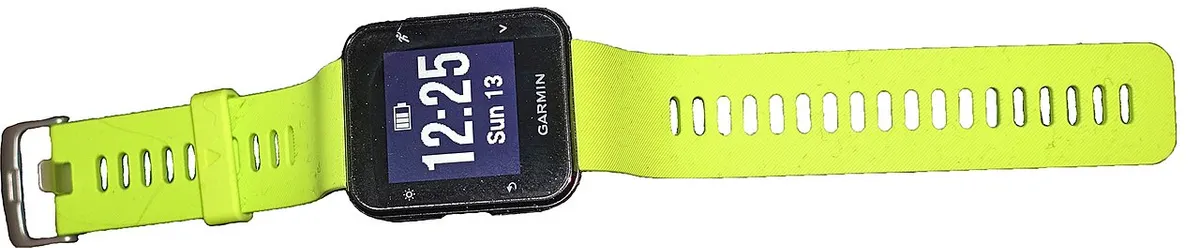
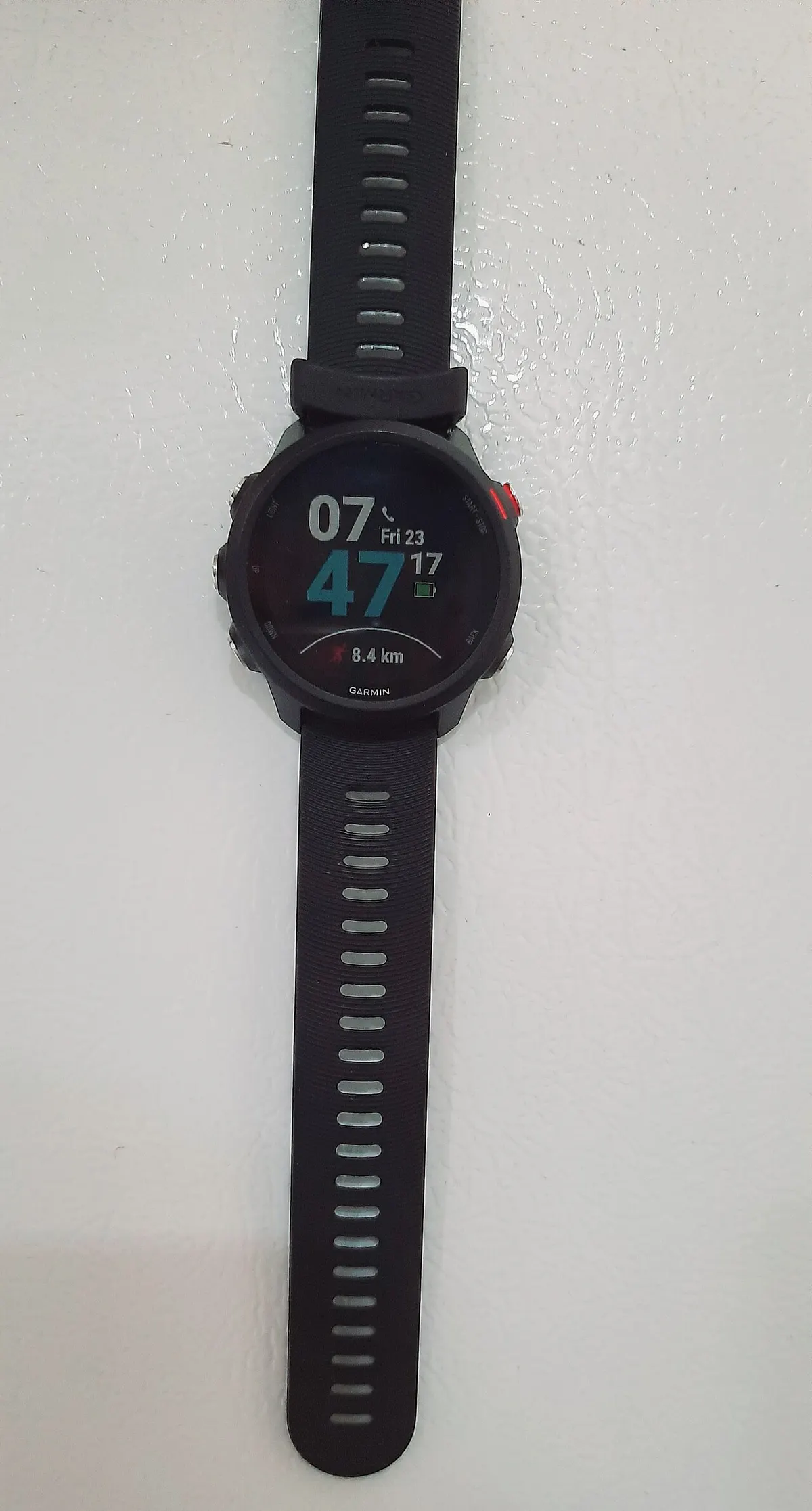
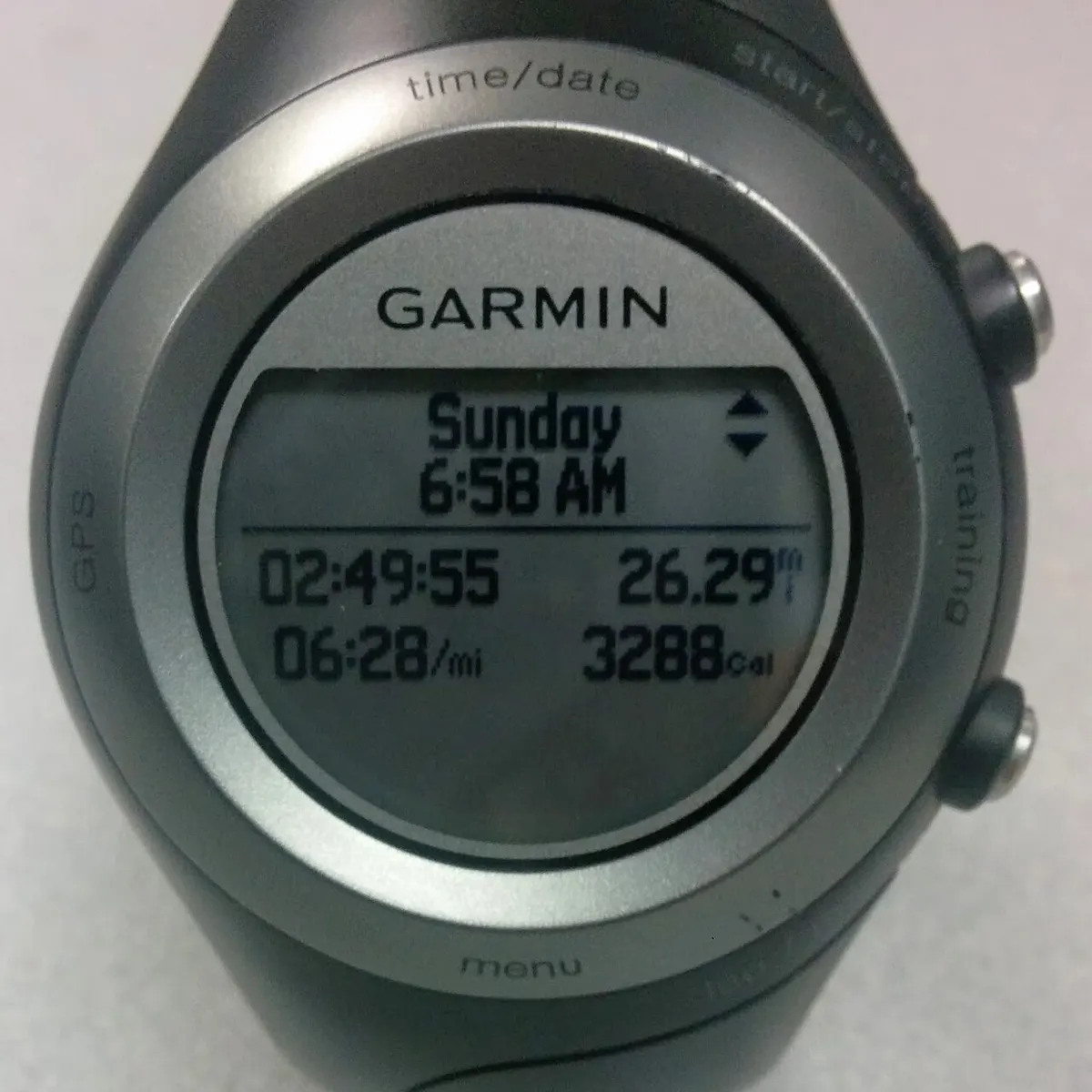
Charging convenience also depends on having the correct compatible cable and an appropriate opportunity to charge. Confirm the supplied accessories and the manufacturer's instructions for the exact variant instead of inferring compatibility from the connector visible in a photograph. The archive watch images here show other Garmin generations for context; they do not identify the 165 charging system or demonstrate its runtime. Record any separately quoted accessory with the purchase so a comparison does not omit something needed for the setup.
Compare the question you actually have
If the question is continuous activity recording, compare the relevant activity rows. If it is ordinary daily wear, compare the smartwatch conditions and their caveats. If it is mixed use, acknowledge the missing evidence and ask for clarification rather than presenting a converted headline as an answer. Keep the manual version and checked date with the note, then revisit it when the selected model changes. A clear separation of conditions is more useful than a single impressive battery number stripped of its meaning.